
We’ve all been there — you open the fridge, spot last night’s carbonara, and instantly wonder if it’s even worth reheating. Will it go dry? Turn into scrambled eggs? Don’t worry — I’ve tested every method so you don’t have to. Whether you’re using the microwave, stovetop, or oven, this guide will show you exactly how to reheat carbonara so it stays creamy, silky, and full of that rich, cheesy flavour you loved the first time around.
I’ve tested stovetop, microwave, oven and bain-marie reheating to see which ones keep carbonara creamy and which turn it grainy or scrambled. Below you’ll find the exact methods that consistently worked, plus what to avoid and how to fix common reheating mistakes.
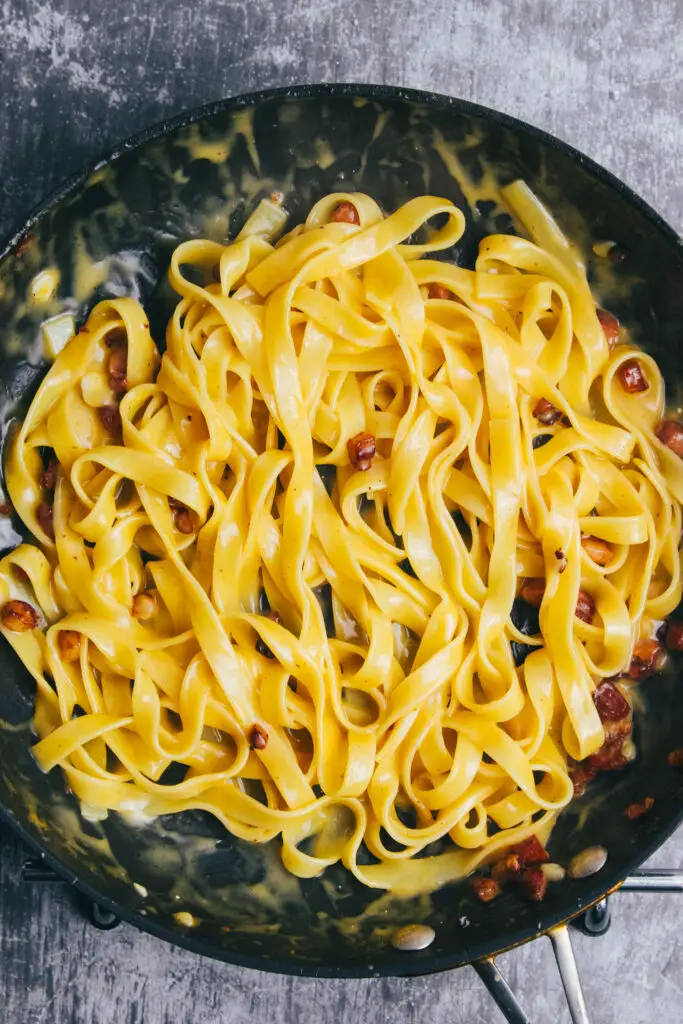
Quick Answer: The Best Way to Reheat Carbonara
The best way to reheat carbonara is with a bain-marie (double boiler). It warms the sauce gently so the eggs don’t scramble and the texture stays silky. For a faster option, use the stovetop on very low heat with a splash of milk or pasta water to loosen the sauce.
Quick Tip: Always reheat carbonara gently over low heat. High heat will scramble the eggs and make the sauce oily. A splash of pasta water works wonders to loosen it up.
If you want a fresh batch instead of reheating leftovers, try my Easy Tagliatelle Carbonara for the perfect silky base. You can also explore more dishes in my Easy Pasta Recipes Hub for quick meals that always hit the spot.
How Do You Reheat Carbonara Sauce?
Do’s:
1. Use a non-stick pan: When reheating your favourite spaghetti carbonara recipe, it is best to use a non-stick pan to prevent the pasta from sticking and burning.
2. Add a splash of milk, cream, or warm pasta water: These help revive the sauce and keep it silky — avoid plain water as it can dilute the flavour.
3. Heat on medium heat: Add a small amount of butter to a pan and heat gently to preserve the rich flavors. To prevent the egg yolks in the cheese sauce from curdling, heat the dish on low heat and stir continuously with a wooden spoon until warmed through. You want to keep the pasta al dente, so pay careful attention.
4. Add fresh herbs or Parmesan cheese: For added flavour, sprinkle some fresh herbs or grated Parmesan/pecorino cheese on top of the reheated carbonara.
5. Serve on warm plates: carbonara tends to go cold very quickly, so to keep the food warm, it is best served on warm plates after reheating
Don’ts:
1. Reheat for too long: Do not overheat carbonara, as this can cause it to become dry and lose its creamy texture – low and slow is the way!
2. Skip stirring: Make sure to stir constantly while reheating carbonara to evenly distribute the heat and prevent clumping of the creamy sauce
3. Avoid adding cold water because it dilutes the sauce. If you need extra moisture, use warm pasta water, milk or cream — these keep the sauce creamy instead of thinning it out.
Reheating Methods Ranked (Best to Worst)
- Bain-marie: Best texture, zero risk of scrambling
- Stovetop: Quick and creamy if kept on very low heat
- Microwave: Works for small portions if stirred often
- Oven: Best for large batches but can dry out the pasta
Different Methods For Reheating Carbonara
How to Reheat Carbonara on the Stove for a Creamy Finish
- Transfer the cooked pasta to a cold pan and reheat it over gentle heat.
- Add a splash of cream, stock or milk to help loosen up the sauce and prevent it from drying out.
- Stir frequently until heated through.
- Take off the heat and serve
How to Reheat Carbonara in the Microwave (Without Drying It Out)
- Place the leftover carbonara in a microwave-safe bowl and cover it with a damp paper towel or a lid to retain moisture. If the sauce looks particularly dry, add a little stock or cream to revive it.
- Heat on medium-high heat for 1-2 minutes, stirring halfway through and heating in short bursts
- Serve
How to Reheat Carbonara in the Oven — Best for Large Portions
- Ideal for big batches, place the leftover pasta in an oven-safe baking dish.
- Cover with foil and bake at 180 for 15-20 minutes until heated.
- Serve
Reheat Carbonara Using a Bain-Marie (for the Creamiest, Silkiest Results)
Reheating carbonara in a bain marie is the best method to ensure the dish retains its creamy texture and doesn’t dry out or separate. A bain marie, also known as a water bath, is a gentle heating method that uses hot water to heat food slowly without direct contact with the heat source. To reheat carbonara in a bain Marie, follow these simple steps:
1. Fill a saucepan with 2 inches of water and simmer over just enough heat.
2. Place your small bowl of leftover carbonara (preferably in an oven-safe dish) into the simmering water, ensuring the water doesn’t touch the bowl. Ensure the bowl is big enough to get ‘lodged’ in the saucepan and not touch the water below it.
3. Cover the saucepan with a lid and let the carbonara heat up slowly for about 10-15 minutes, stirring occasionally to ensure even heating.
4. Check the temperature of the carbonara using a food thermometer – it should reach at least 165°F (74°C) to be safe for consumption.
5. Once heated through, serve your deliciously creamy carbonara and enjoy!
Remember not to overheat your carbonara, as this can cause it to become dry or curdled. Reheating it gently in a bain-marie will help maintain its luscious texture and flavour. So next time you have leftover carbonara, try using this method for perfect results every time!
Another method is to reserve some of the sauce and just reheat it when needed. Then, you only need to toss it through freshly cooked pasta. This method leaves the sauce to cool at room temperature for up to 2 hours. You can then place it in an airtight container, covered with plastic wrap on the surface to prevent skin from forming and keep it in the fridge for the next day. It will keep for up to 3 days. Using this method you can bring a big pot of pasta water to the boil to cook the pasta and use a cup of pasta water to adjust the sauce and bring it back to life.
You can also try to liven up the reheated dish by adding extra cheese and fresh herbs to give it a new lease of life. If you have any bacon, fry until golden brown and add that and the bacon fat to revive the dish. If you have soggy pasta, you can also revive it by sauteing it quickly in a little olive oil to bring it back to life.
What Could Go Wrong When Reheating Carbonara (and How to Fix It)
Even the best carbonara can turn tricky when it comes to reheating. The sauce’s creamy texture relies on eggs and cheese — two ingredients that can easily curdle, dry out, or split if handled the wrong way. Here’s what can go wrong, why it happens, and how to fix it so your leftovers taste just as good as fresh.
The Sauce Turns Scrambled or Grainy
What happened:
The heat was too high or direct, causing the eggs to cook instead of emulsify back into the sauce.
How to fix it:
Remove the pan from the heat immediately and stir in a splash of warm milk or pasta water to loosen it. Next time, use the stovetop or bain-marie method over very low heat, stirring constantly.
The Pasta Goes Dry and Clumpy
What happened:
The sauce thickened too much or the pasta absorbed all the moisture during storage.
How to fix it:
Add a tablespoon or two of reserved pasta water, milk, or cream while reheating to bring back the silky consistency. For an extra boost, stir in a tiny knob of butter right before serving.
The Sauce Splits or Looks Oily
What happened:
Fat separated from the eggs and cheese because the mixture was overheated or lacked enough liquid.
How to fix it:
Take it off the heat and whisk in a spoonful of warm milk or pasta water until smooth again. Gentle heat is key — the bain-marie method prevents this by reheating slowly and evenly.
It Smells or Tastes Eggy
What happened:
The eggs have cooked a little too far, or the sauce started to curdle.
How to fix it:
Stir briskly off the heat with a splash of liquid to cool it down and bring it back together. Next time, keep the pan just warm — not hot — and stir continuously.
It’s Cold in the Middle
What happened:
The heat didn’t distribute evenly, especially if reheating a large portion or using the microwave.
How to fix it:
Reheat in smaller batches or stir every 20–30 seconds in the microwave. If using the stovetop, cover the pan with a lid for a minute to trap gentle steam and heat it through.
It’s Been Reheated Too Many Times
What happened:
Each reheating cycle makes the sauce drier and riskier for food safety.
How to fix it:
Carbonara should only be reheated once. Store it in the fridge for up to 2 days and reheat only the amount you plan to eat. For longer storage, freeze the sauce separately and toss with freshly cooked pasta later.
Tips from My Kitchen for Perfectly Reheated Carbonara
Before settling on these tips, I reheated carbonara using four different methods and tested different pasta shapes, sauces and portion sizes. Some attempts turned dry or grainy, others scrambled — these tips come from the techniques that consistently produced the creamiest results.
Gentle Heat Is Everything
Carbonara doesn’t like sudden heat. Whether you’re using the stovetop, bain-marie, or microwave, keep the temperature low and slow. Stir often and remove the pan from the heat the second the sauce starts to thicken — it will continue to warm through from residual heat.
Add Moisture Before You Reheat
A splash of pasta water, milk, or even cream helps loosen the sauce and re-emulsify the eggs and cheese as it warms up. Don’t wait until it’s dry — add the liquid right at the start so it stays silky throughout.
Stir, Don’t Scramble
Keep the pasta moving while it warms. Stirring stops the eggs from catching on the pan and gives you that glossy, restaurant-style coating. I like to use tongs — they make it easier to fold everything together evenly.
Revive the Flavour
A tiny knob of butter, a drizzle of olive oil, or a sprinkle of freshly grated Parmesan just before serving can transform leftovers. It brings back that rich flavour and luxurious mouthfeel carbonara is known for.
Don’t Reheat Twice
Once is enough. Each reheating dries out the pasta and increases the risk of curdling the sauce. Store leftovers in an airtight container and only warm what you’ll actually eat.
My Go-To Method
When I have time, I always use the bain-marie method — it’s slow, gentle, and foolproof. The steam warms the pasta evenly without cooking the eggs, and it’s nearly impossible to overdo it. It’s the best way I’ve found to keep that just-made texture.
From My Kitchen
If you love creamy carbonara as much as I do, think of reheating it as reviving rather than cooking again. A bit of patience, a splash of liquid, and constant stirring are all it takes to bring it right back to life — silky, glossy, and every bit as comforting as the first time.
It is possible to reheat carbonara but remember that it may not be as good as when first made. Carbonara is a dish that is at its best when fresh. The stovetop method/bain-marie is the best way to add a touch of cream and heat the egg mixture very gently to bring the dish back to life.
Storage and Reheating Summary
| Method | How to Do It | Best Temperature / Setting | Time | Result | Best For |
|---|---|---|---|---|---|
| Bain-Marie (Double Boiler) | Place the carbonara in a heatproof bowl over a pan of simmering water. Stir continuously until warmed through. | Gentle steam (low heat) | 5–8 mins | Creamy, silky texture — no risk of scrambling | Best overall method for perfect texture |
| Stovetop (Pan) | Add a splash of milk or pasta water and heat on very low, stirring constantly. Remove as soon as sauce loosens. | Low heat | 3–5 mins | Creamy and glossy if watched closely | Quick option for single portions |
| Microwave | Place in a microwave-safe bowl with a splash of milk. Cover loosely and heat in short 20-second bursts, stirring in between. | Medium (50%) | 1–2 mins total | Can dry out if overheated | Quickest method, good for small portions |
| Oven | Transfer to an ovenproof dish, add a little cream or milk, cover with foil, and bake until just hot. | 160°C / 320°F | 10–15 mins | Slightly drier texture | Best for larger batches |
| Cold from Fridge | Stir through a touch of olive oil or a spoon of water to loosen before reheating. Eat within 2 days. | — | — | Maintains quality if stored properly | Prepping leftovers safely |
| Freezer (if sauce and pasta stored separately) | Freeze the sauce in an airtight container. Defrost in fridge overnight and toss with fresh pasta. | — | — | Sauce reheats well, pasta less so | For long-term storage (up to 2 mo |
Storage Tips
- Store leftover carbonara in an airtight container within 2 hours of cooking.
- Keep in the fridge for up to 2 days — longer storage affects texture.
- If you plan to freeze, store the sauce separately from the pasta for best results.
FAQ’s
Yes — as long as it was refrigerated within 2 hours of cooking and reheated to 165°F (74°C). Carbonara should only be reheated once for food-safety and texture reasons.
The bain-marie method is the most reliable. Place your leftover carbonara in a heatproof bowl over a pan of simmering water, and stir until warmed through. This gentle heat keeps the sauce silky and prevents curdling. If you’re short on time, the stovetop method also works well.
Homemade carbonara lasts for up to 2 days in the fridge when stored in an airtight container. Make sure to refrigerate it within 2 hours of cooking and reheat it only once for food safety.
No — it’s best not to reheat carbonara more than once. Each reheating cycle dries out the sauce and increases the risk of bacterial growth. Only warm up the portion you plan to eat.
Yes, but use short bursts and medium power (around 50%). Add a splash of milk or pasta water, cover loosely, and stir every 20–30 seconds. This helps keep it creamy and stops the eggs from scrambling.
Always add a little moisture before reheating — about a tablespoon of milk, cream, or pasta water. Heat it slowly and stir often. This helps loosen the sauce and bring back that glossy, silky finish.
You can freeze the sauce separately for up to 2 months, but freezing pasta with the sauce isn’t ideal — the texture turns soft and grainy once thawed. For best results, make fresh pasta and toss it with the reheated sauce.
Technically, yes — as long as it’s been refrigerated promptly and eaten within 1–2 days. However, the sauce firms up when cold, so the texture won’t be as creamy. For the best experience, reheat it gently instead.
Love easy pasta dinners? Join the Scoffs and Feasts newsletter and get more quick, comforting meals sent straight to your inbox!
Try Another Recipe
If you’re planning pasta night, check out my Easy Pasta Recipes hub

Hi, I’m Paul! I’m a passionate home chef, recipe developer, and food lover who believes that cooking should be fun, rewarding, and stress-free! Through Scoffs & Feasts, I share my favorite tried-and-tested recipes, cooking tips, and troubleshooting advice to help home cooks gain confidence in the kitchen. Whether you’re a beginner or an experienced foodie, I hope my recipes inspire you to try something new.