
Simple ingredients. Big flavour. Zero stress.
At a Glance
Prep time: 5 mins
Cook time: 25 mins
Total time: 30 mins
Serves: 2
From My Kitchen
I’ve been making spaghetti Napoli since I first started learning to cook, and it’s one of the recipes I keep coming back to. It’s proof that simple ingredients, when treated right, can make something truly comforting and satisfying. Over the years, I’ve tried different tinned tomatoes, played around with cooking times, and even experimented with finishing the sauce with butter. This version is the one I make most often — unfussy and flavourful.
What is Spaghetti Napoli?
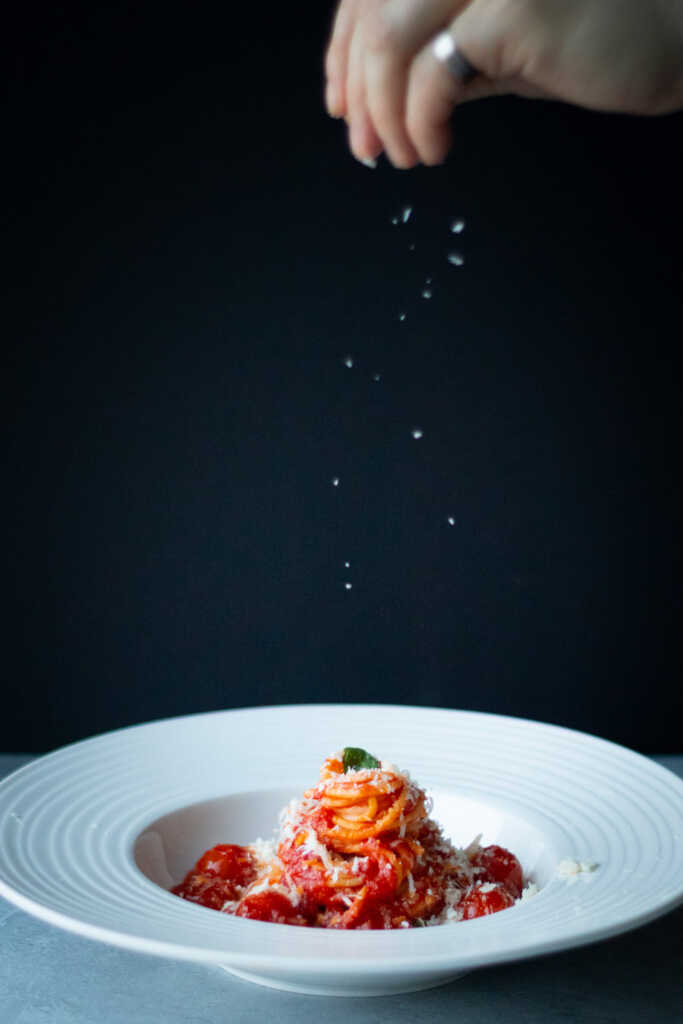
Spaghetti Napoli is a traditional Italian pasta dish that keeps things simple: al dente spaghetti tossed in a rich tomato sauce made with just a handful of good-quality ingredients. Coming from Naples in southern Italy, it’s sometimes confused with more complex sauces like Bolognese or marinara—but Napoli sauce is distinctly minimal, usually made without meat, dairy, or long simmering.
This dish is minimalist: no hidden vegetables, no cream, no long ingredient list—just a clean tomato flavour, fragrant olive oil, and garlic, often finished with fresh basil. It’s a staple across Italian households and perfect for a weeknight when time and energy are low, but flavour still matters.
If classic Italian comfort food is your thing, take a look at my full pasta recipes collection for even more easy weeknight favourites
Napoli vs. Pomodoro vs. Marinara – What’s the Difference?
- Napoli (Pomodoro): Pure tomato, garlic, herbs, olive oil. Simple and smooth.
- Marinara: Similar, but sometimes includes onion or chili, and is often chunkier.
- Pomodoro: Technically means “tomato” in Italian — in practice, it’s often interchangeable with Napoli sauce, especially outside Italy.
Common Mistakes (and How to Fix Them)
“It Tastes Bland”
The Problem:
When your ingredients are this simple, there’s nowhere to hide. Poor-quality tomatoes = poor-quality sauce.
Fix:
Use San Marzano or another high-quality canned tomato. A pinch of sugar helps balance acidity, and don’t skip the salt. Fresh basil or a swirl of olive oil at the end brings it to life.
“The Sauce Is Watery”
The Problem:
Tomatoes that haven’t cooked down properly leave you with a soupy sauce.
Fix:
Simmer it uncovered for 20–25 minutes. Give the tomatoes a gentle smash while they cook, and let them reduce properly before tossing with pasta.
“The Sauce Doesn’t Stick to the Pasta”
The Problem:
Pouring sauce on top of plain pasta? Nope. That’s why it slides right off.
Fix:
Finish cooking the spaghetti in the sauce, with a splash of reserved pasta water. It emulsifies the sauce and helps it cling like a dream.
I’ve probably made this dish over a hundred times — and I still crave it. Here’s exactly how I do it.
Spaghetti Napoli Recipe (The Way I Make It)
Ingredients:
- 200g spaghetti
- 1 can (400g) San Marzano tomatoes or good-quality whole peeled tomatoes
- 4 garlic cloves, thinly sliced
- 3 tbsp extra virgin olive oil
- A pinch of sugar (honey also works well)
- Salt, to taste
- Black pepper, to taste
- 1 tsp Oregano
- Grated Parmesan (optional)
Ingredient Notes From My Kitchen
Optional Butter: Stirring in a knob of butter at the end mellows the acidity of the tomatoes and gives the sauce a silky finish. It’s not traditional, but it makes a big difference in flavour and mouthfeel.
Tinned Tomatoes: I always go for san marzano tomatoes and crush them by hand or with a wooden spoon — they have better flavour and texture than pre-chopped or passata and great for sauces. If using passata, simmer it longer to develop depth.
Garlic: I like to mince my garlic so I can get as much garlic flavour into the sauce. Just be careful not to burn it!
Olive Oil: A good-quality extra virgin olive oil is worth it here. Since there are so few ingredients, the oil really makes a difference
Dried Oregano: I like to add herbs to my food and love the pairing of oregano and tomato. You can also use basil which is a great combo too. Dried oregano has a great flavour.
Sugar: I find that even the best tinned tomatoes still require a little sugar to enhance their flavour when making sauces with them. It just helps to bring out the natural flavour of the tomatoes. You can also experiment with honey for a fuller flavour profile.
Parmesan: Parmesan is not traditional, but I like cheese on my pasta! You can grate some at the end or you can even grate some into the sauce for another flavour dimension. Pecorino would also work too.
Instructions:
Start the Sauce
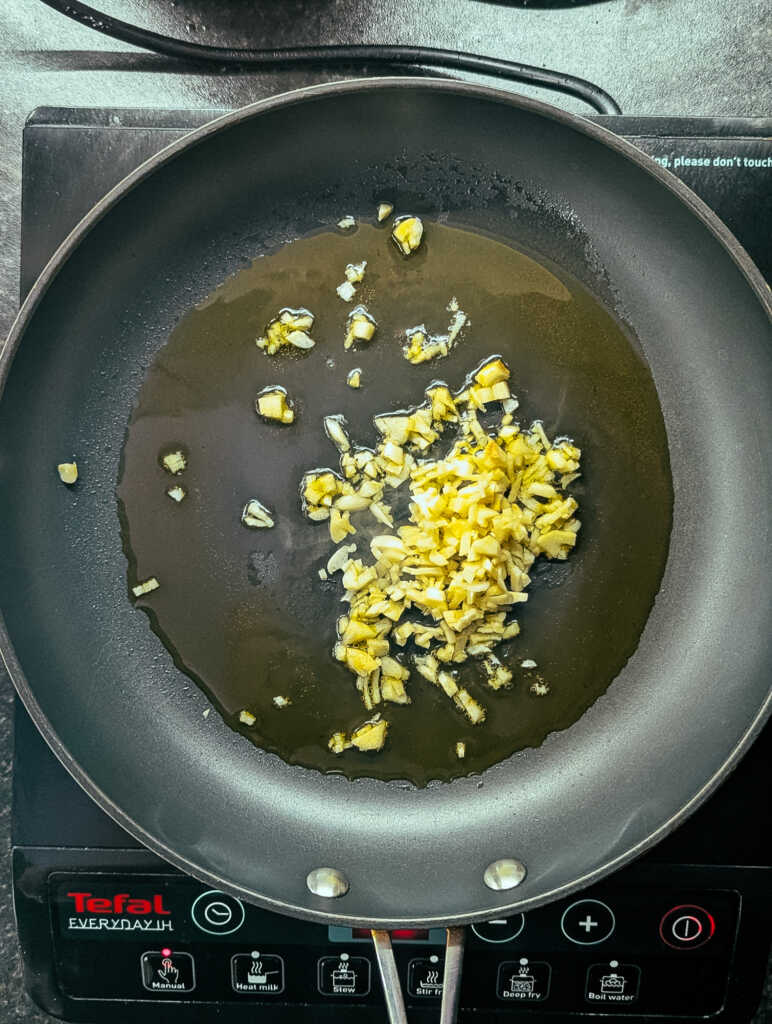
Heat olive oil in a pan over medium-low heat. Add garlic and sauté until just fragrant (about 1–2 minutes — don’t let it brown).
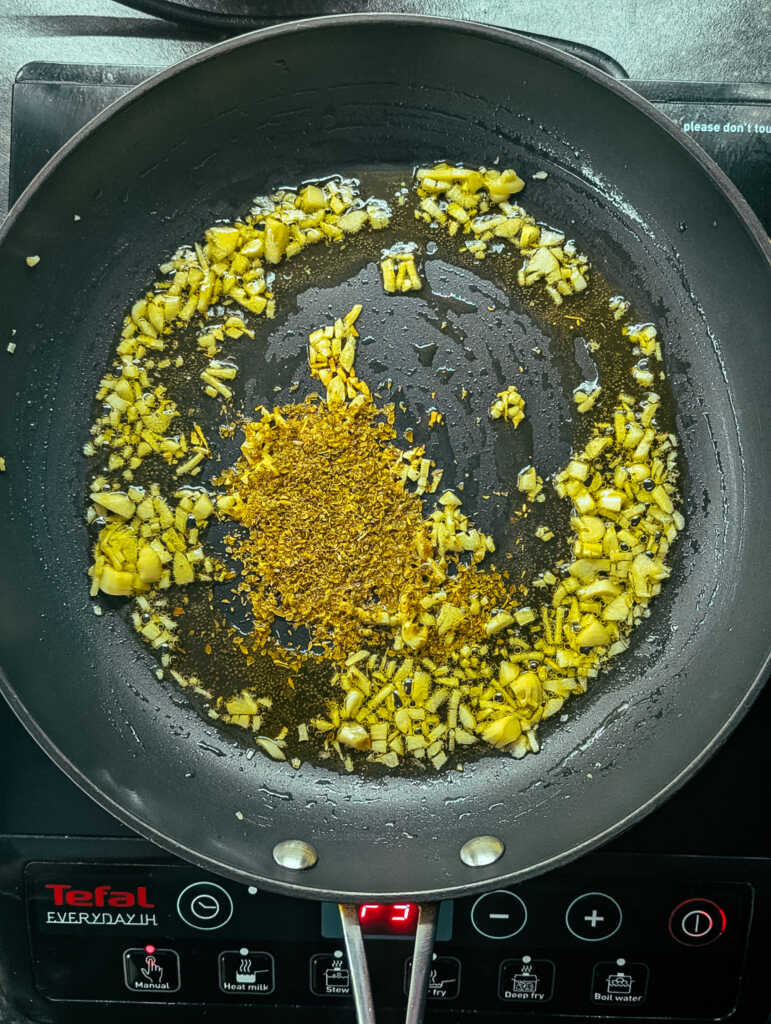
Add the dried oregano and saute gently for a minute to bloom the herb
- Add the Tomatoes
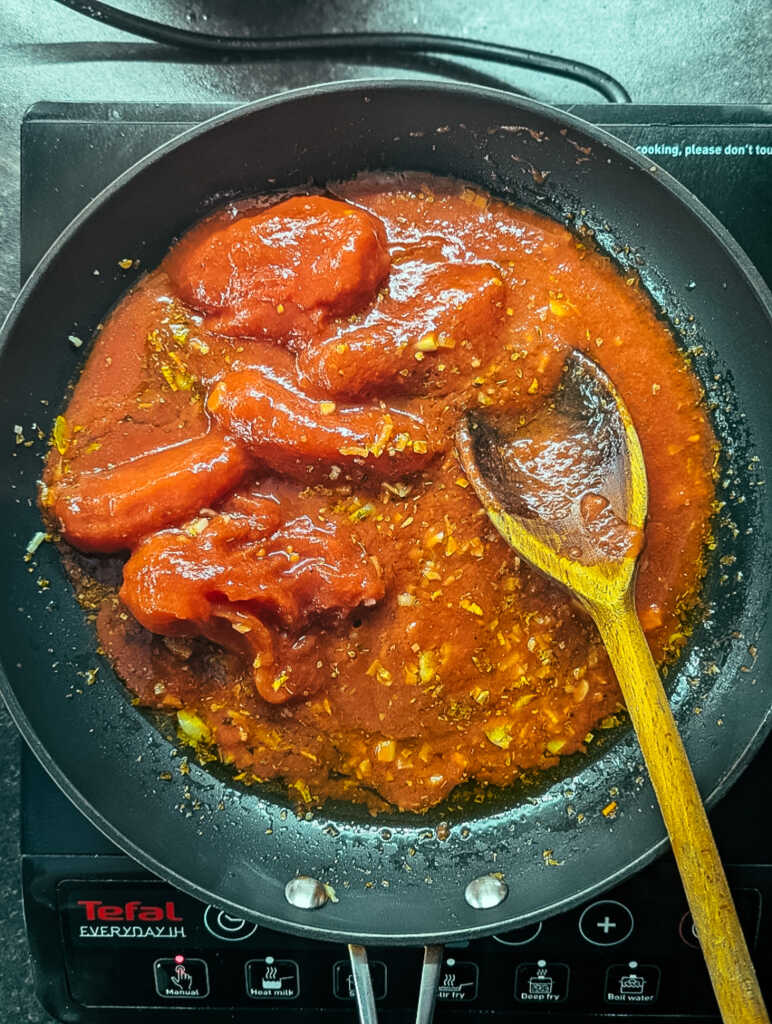
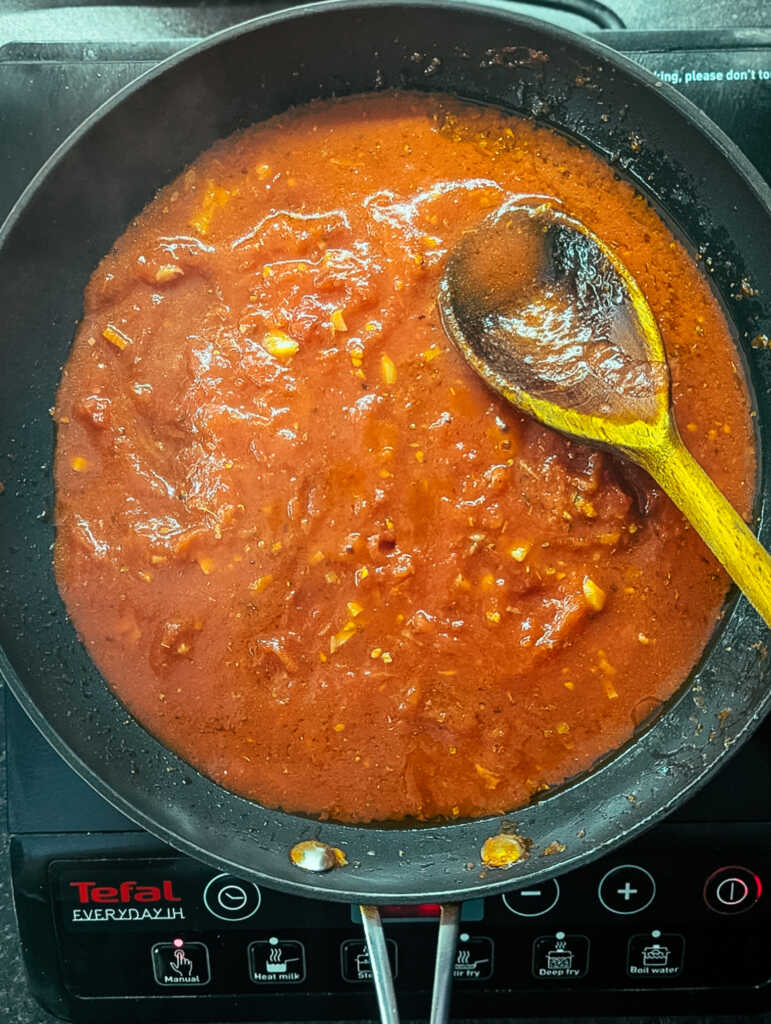
Pour in the tomatoes, crush them gently with the back of a wooden spoon, and let everything simmer uncovered for 20–25 minutes. It should just bubble gently. Season with salt, pepper and a small pinch of sugar if needed (taste, taste, taste!)
Cook the Pasta
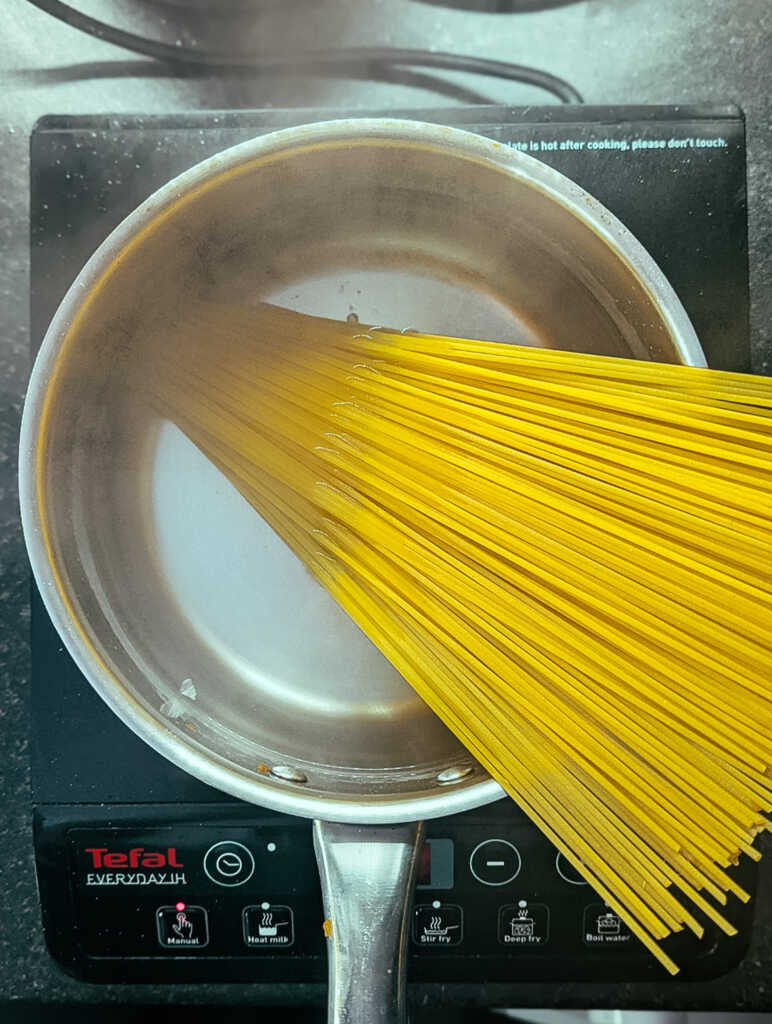
Boil spaghetti in well-salted water until just under al dente (about 1 minute less than the package says). Save a cup of the pasta water.
Toss & Combine
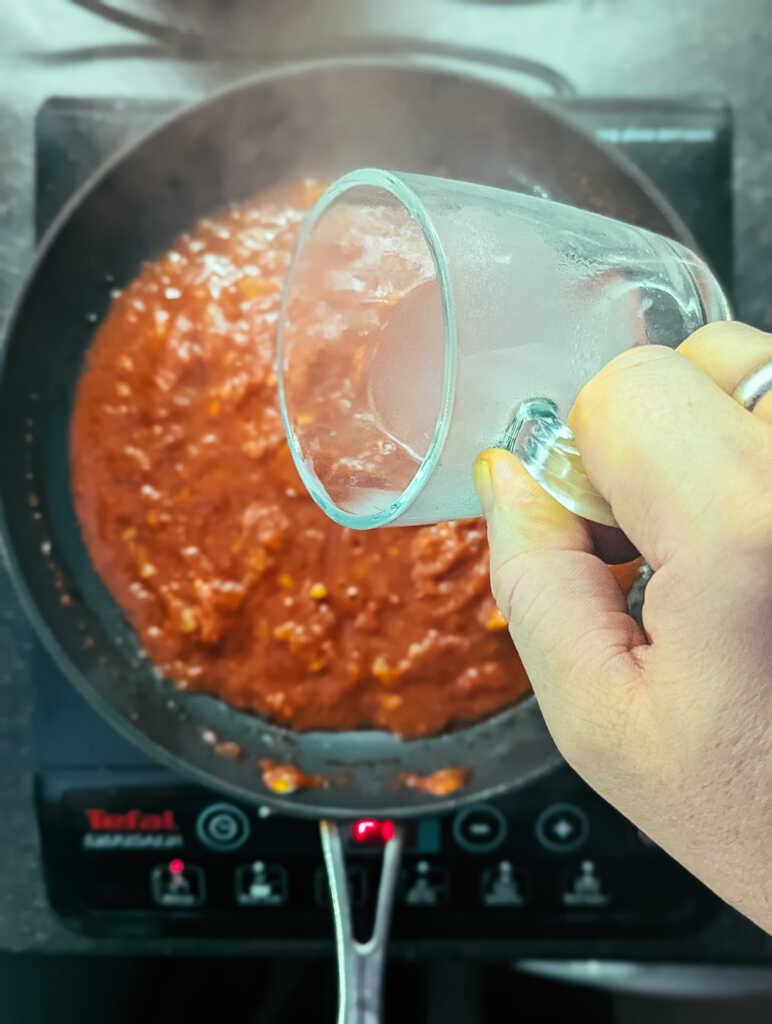
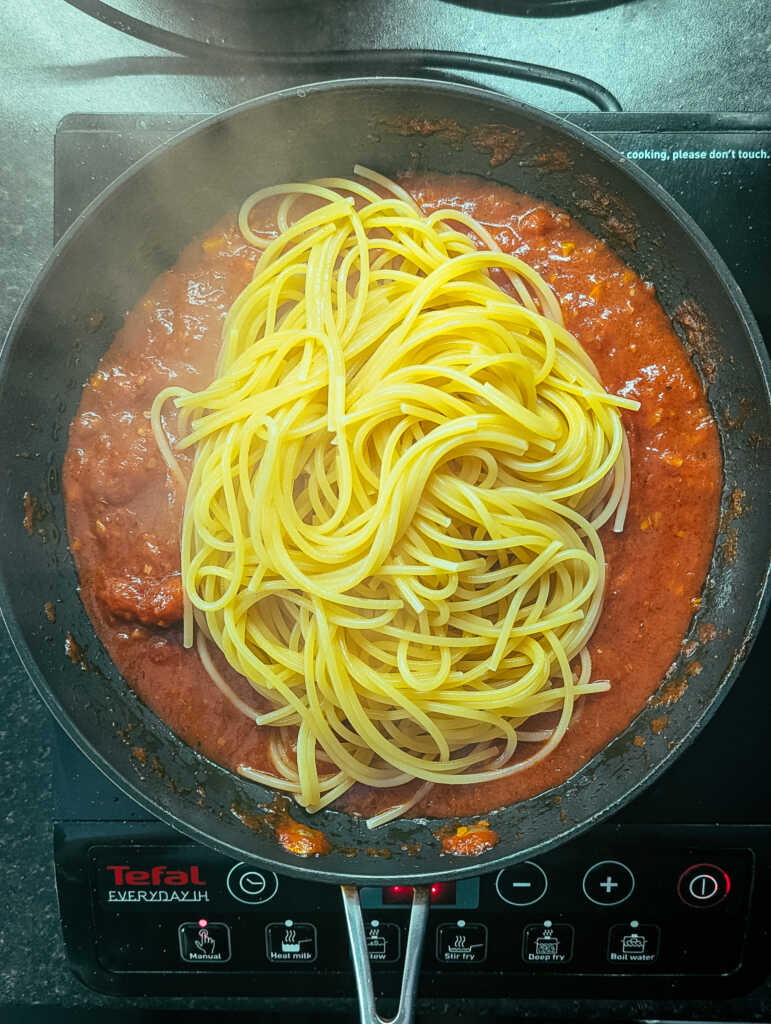
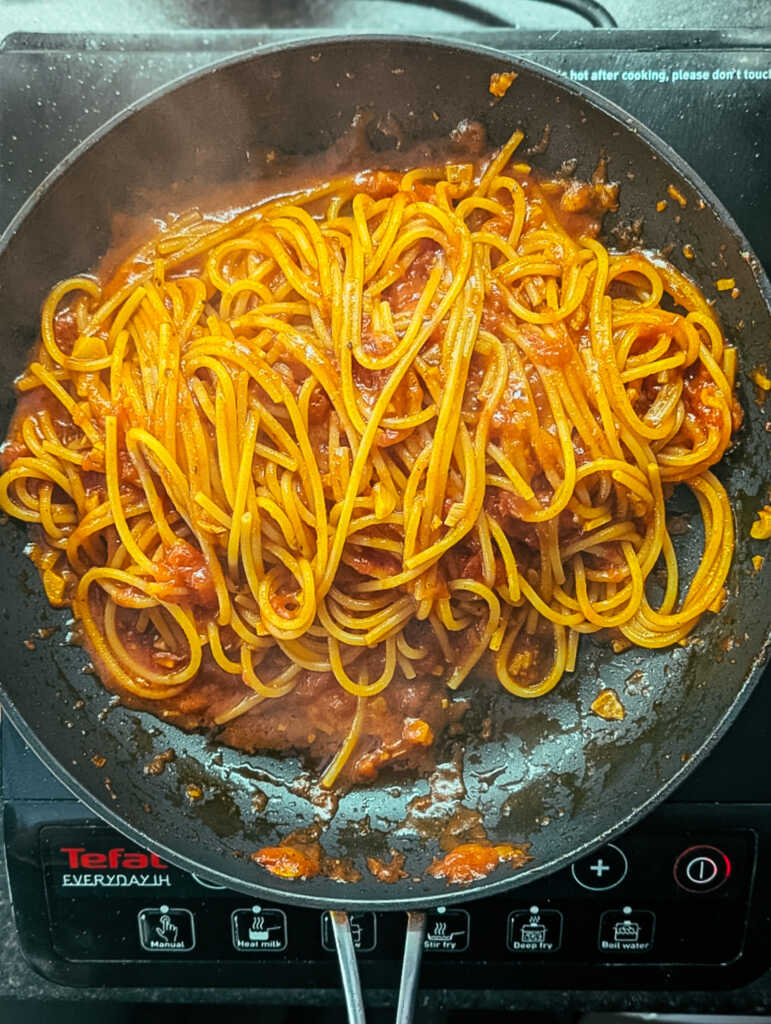
Add the drained pasta to the sauce. Pour in a splash of pasta water and toss it all together over low heat for 1–2 minutes until the sauce clings to each strand of pasta
Finish It Off
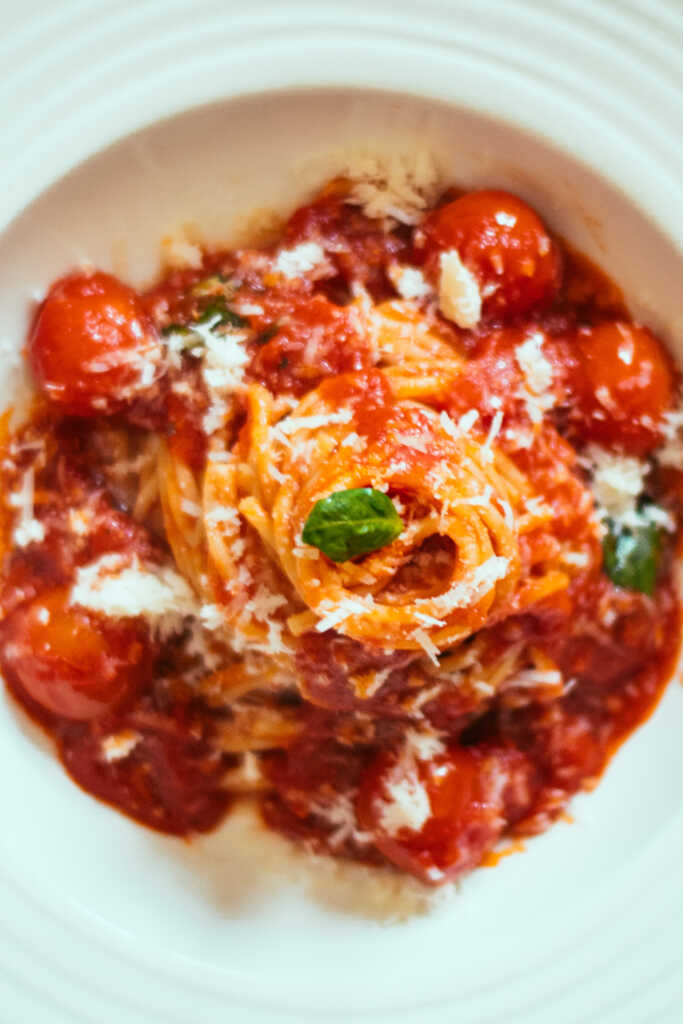
Tear in some basil, drizzle a little more olive oil over the top, and plate it up. Add Parmesan if you’re into that — I am.
Tips From My Kitchen
- Be careful with the heat and watch your garlic when sauteing, it should just be softened not browned.
- Let the sauce simmer gently for 20–30 minutes if you have time — it concentrates the flavour and brings out natural sweetness in the tomatoes. Look for the sauce to thicken slightly and coat the back of a spoon when ready. It shouldnt look watery.
- Always cook the pasta until just before al dente, then finish it in the sauce for better texture and flavour absorption. You should notice a slight orange sheen.
- Save some pasta water — just a splash helps loosen the sauce and creates that perfect clingy texture.
What Can Go Wrong (And How to Fix It)
- Sauce tastes too acidic? Add a pinch of sugar/honey or swirl in a little butter to mellow it out.
- Sauce is watery? Keep simmering it uncovered and stir occasionally. It should reduce to a thick, spoon-coating consistency. You can also add tomato puree to the sauce – add after the oregano and cook it out for 2 minutes to reduce the acidity.
- Garlic burned? Burnt garlic turns bitter and ruins the sauce — keep the heat low when infusing the oil and add garlic once the oil is hot but not smoking. If you burn the garlic you will need to start again.
- Sauce isn’t coating the pasta? This can happen when there is not enough starchy pasta water to help emulsify everything. Add a little more and toss the pasta throughly over heat.
- Overcooked pasta. Keep an eye on the pasta and get in the habit of cooking it 1-2 minutes short of being done. I always finish my pasta in the sauce. I like to take a small amount of pasta and check it by biting it. You can tell how close it is to being done by how firm it is.
- Sauce tastes flat. Add some seasoning at the beginning and taste. Remember that as the sauce reduces the flavour will intensify. I like to leave my seasoning until the last minute, once the sauce is basically ready so I can get the seasoning on point.
- Pasta sticking together. I make sure that when I am cooking pasta, I always give it a stir when your first add the pasta to the water. If you don’t do this, it usually sticks together.
- Too garlicky? I love garlic in my pasta sauces but if you find it is too strong you can reduce the amount. You can also add whole crushed garlic cloves to the oil then remove them from the sauce when ready. This gives a nice subtle garlic flavour.
Tried and Tested Variations
- Spicy Napoli: Add a pinch of dried chili flakes or fresh red chili with the garlic for a subtle heat.
- Anchovy Napoli: Melt 1–2 anchovy fillets into the oil before adding garlic for a deep savoury twist (they dissolve and don’t taste fishy).
- Herby Twist: Add torn fresh basil at the end for added aroma.
- Cheesy Version: Grate over Parmigiano Reggiano or Pecorino just before serving — not traditional, but absolutely delicious.
Serving Suggestions
Spaghetti Napoli is a simple dish, but you can turn it into a full meal with the right sides and toppings. Here are some of my favourite pairings:
Optional chilli flakes – Sprinkle for a gentle heat
Fresh basil leaves – Always add these just before serving.
Grated Parmesan or Pecorino Romano – For a salty, savoury finish (skip for vegan version).
Crusty garlic bread – Perfect for mopping up the sauce.
Mixed green salad – A light lemon vinaigrette balances the richness.
Glass of red wine – Try a Chianti or light Merlot for a true Italian touch.
For an added crunch, top your spaghetti Napoli with this crispy pangrattato breadcrumb topping.
Ingredient Swaps & Variations
This recipe is flexible and can be adapted to what you have on hand. Here are some simple swaps:
Protein option: Stir in cooked tuna, grilled chicken, or browned mince if you’d like to bulk it out.
Pasta: You can use linguine, penne, or gluten-free pasta instead of spaghetti.
Tomatoes: use chopped tomatoes, but you can also use passata if that’s what you have. Use the same amount.
Herbs: Basil or thyme work in a pinch if you don’t have oregano
Add-ins:
Olives or capers for a briny hit
Anchovies for umami depth (cook them down with the garlic)
Mushrooms, spinach, or courgette for a veggie boost
A Quick Note on Its Origins
Although Spaghetti Napoli is a well-loved dish worldwide, the name isn’t commonly used in Italy. In Naples, the locals would more likely refer to this dish as “spaghetti al pomodoro” — simply spaghetti with tomato sauce.
Outside Italy, particularly in the UK and Australia, Napoli sauce or Napolitana sauce has come to mean a simple tomato-based pasta sauce, usually meat-free and seasoned with garlic and basil.
Its charm lies in its simplicity — no heavy ingredients, no long simmer times — just good-quality tomatoes, garlic, olive oil, and fresh basil. It’s the perfect everyday pasta.
Quick Tips for Success
| Problem | Quick Fix |
| Sauce is too sour | Add a pinch of sugar |
| Sauce too thin | Simmer longer, reduce uncovered |
| Pasta is slippery | Toss pasta in sauce with a little pasta water |
| Flavour feels flat | Use better quality tomatoes and fresh herbs |
Storage & Reheating Instructions
Spaghetti Napoli keeps well, making it ideal for batch cooking or meal prep.
- Fridge: Store in an airtight container for up to 3 days.
- Freezer: Freeze the sauce (without pasta) for up to 3 months. Defrost overnight in the fridge before reheating.
- Reheating:
- Stovetop: Reheat gently in a pan with a splash of water or olive oil to loosen the sauce.
- Microwave: Cover loosely and heat in 1-minute bursts, stirring between intervals.
💡 Tip: If you’re reheating pasta that’s already mixed with sauce, add a splash of hot water to help revive the texture.
Why This Dish Is More Italian Than You Think
Spaghetti Napoli isn’t just about flavour — it’s about holding back. It’s proof that when you’ve got good ingredients, you don’t need to overdo it.
No meat, no cream, no hassle — just proper technique and good seasoning.
It’s the kind of dish that teaches you how to cook: how to taste, balance, and trust your ingredients.
Final Thoughts
If you’ve ever made Spaghetti Napoli and thought “meh,” now you know why — and how to fix it.
This one’s made weekly in my kitchen. It’s budget-friendly, weeknight-friendly, and hits the spot. Let me know how yours turns out — tag me @scoffsandfeasts or drop a comment below. I’d love to see your version!
Find more ideas in my Easy Pasta Recipes collection.
FAQ’s
Yes! If you’re using fresh tomatoes, go for ripe plum or Roma tomatoes. Blanch, peel, and crush them before cooking. Just note that canned San Marzano tomatoes offer reliable flavour and are more pantry-friendly.
You can freeze the sauce on its own for up to 3 months. Let it cool completely, then store it in an airtight container. Avoid freezing the pasta — it tends to lose texture. Cook fresh pasta when ready to serve.
Spaghetti is classic, but you can use bucatini, linguine, or even penne. Just be sure to finish cooking it in the sauce for that perfect cling.
The sauce can be made 2–3 days in advance and stored in the fridge. Just reheat gently and toss with freshly cooked pasta.
Absolutely. It’s often served without, but a little grated Parmesan or Pecorino Romano adds extra depth.
Yes—Napoli and Napolitana refer to the same style of tomato-based sauce from Naples. In Italy, it’s just called “spaghetti al pomodoro” or “alla napoletana”.
Leftovers keep for up to 3 days in the fridge. Reheat in a pan with a splash of water to loosen the sauce.
Add a pinch of chili flakes when sautéing the garlic. You can also stir in a bit of Calabrian chili paste for extra heat and flavor.
Not quite. While both are tomato-based, Marinara often includes more herbs and is chunkier. Napoli sauce is typically smoother and more pared back in terms of ingredients.
Yes! As written, this recipe is naturally vegan and vegetarian. Just skip the Parmesan topping or use a dairy-free version.
Want to Level It Up?
If you want to take this humble dish to the next level, try pairing it with these:
Tomato Butter Pasta – For when you want a richer, silkier tomato experience.
How to Make Perfect Pangrattato (Italian Breadcrumbs) – Adds an irresistible crunch!
How to Make Spaghetti Napoli (And Fix the Mistakes Everyone Makes)
Equipment
- 1 large frying pan
- 1 large saucepan
- 1 set of silicone tongs
- 1 mesh sieve
Ingredients
- 200 g spaghetti
- 1 can 400g San Marzano tomatoes or good-quality whole peeled tomatoes
- 4 garlic cloves thinly sliced/minced
- 3 tbsp extra virgin olive oil
- A pinch of sugar
- Salt to taste
- Black pepper to taste
- 1 tsp Oregano
- Grated Parmesan optional
Instructions
- Start the Sauce
- Heat olive oil in a pan over medium-low heat. Add garlic and sauté until just fragrant (about 1–2 minutes — don’t let it brown).
- Add the dried oregano and saute gently for a minute to bloom the herb
- Add the Tomatoes
- Pour in the tomatoes, crush them gently with the back of a wooden spoon, and let everything simmer uncovered for 20–25 minutes. Season with salt, pepper and a small pinch of sugar if needed (taste, taste, taste!)
- Cook the Pasta
- Boil spaghetti in well-salted water until just under al dente (about 1 minute less than the package says). Save a cup of the pasta water.
- Toss & Combine
- Add the drained pasta to the sauce. Pour in a splash of pasta water and toss it all together over low heat for 1–2 minutes until the sauce clings to each strand of pasta
- Finish It Off
- Tear in some basil, drizzle a little more olive oil over the top, and plate it up. Add Parmesan if you’re into that — I am.
Notes
Timing Notes
From start to finish, this takes me about 30 minutes, including simmering time. I usually get the pasta water boiling and spaghetti cooking around ten minutes before the sauce is nearly done.
Nutrition (per serving)

Hi, I’m Paul! I’m a passionate home chef, recipe developer, and food lover who believes that cooking should be fun, rewarding, and stress-free! Through Scoffs & Feasts, I share my favorite tried-and-tested recipes, cooking tips, and troubleshooting advice to help home cooks gain confidence in the kitchen. Whether you’re a beginner or an experienced foodie, I hope my recipes inspire you to try something new.