
Serves: 2 | Prep Time: 5 min | Cook Time: 15 min | Total: 20 min
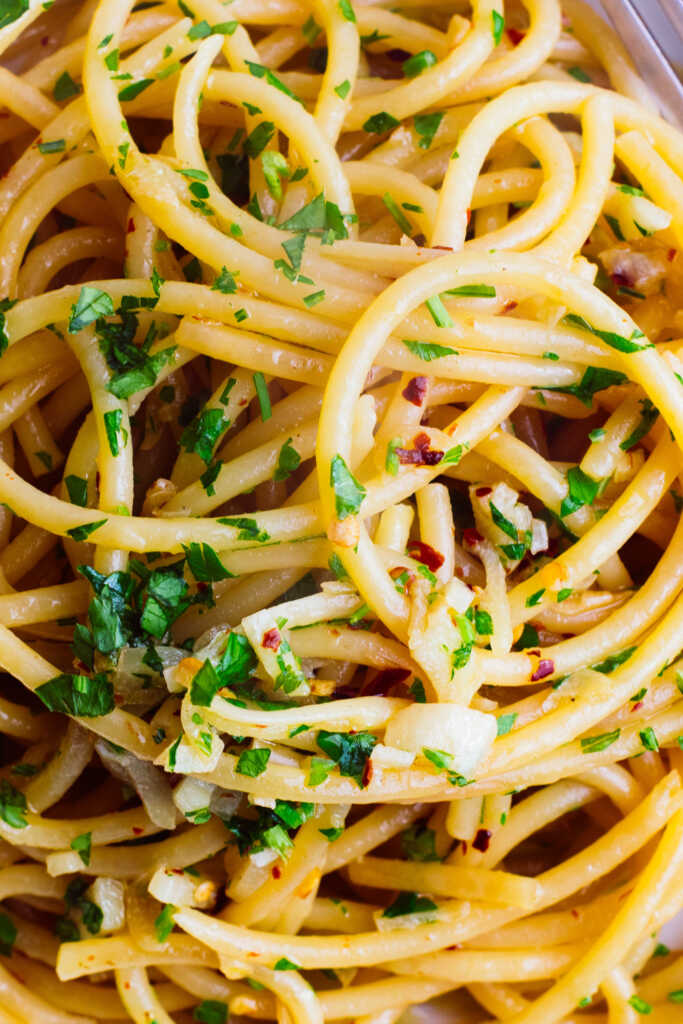
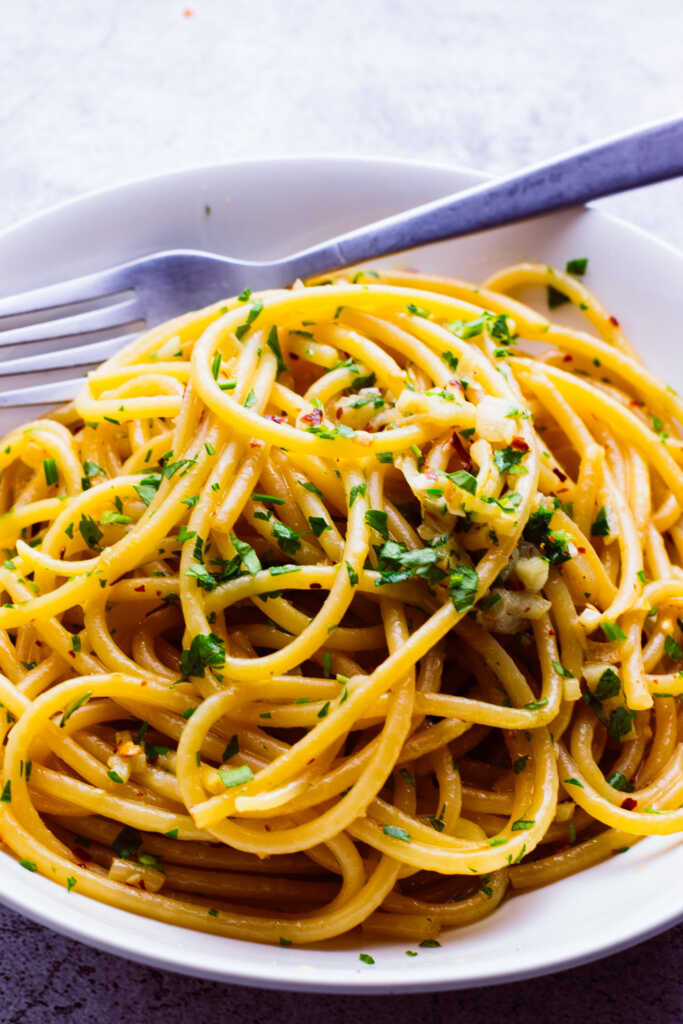
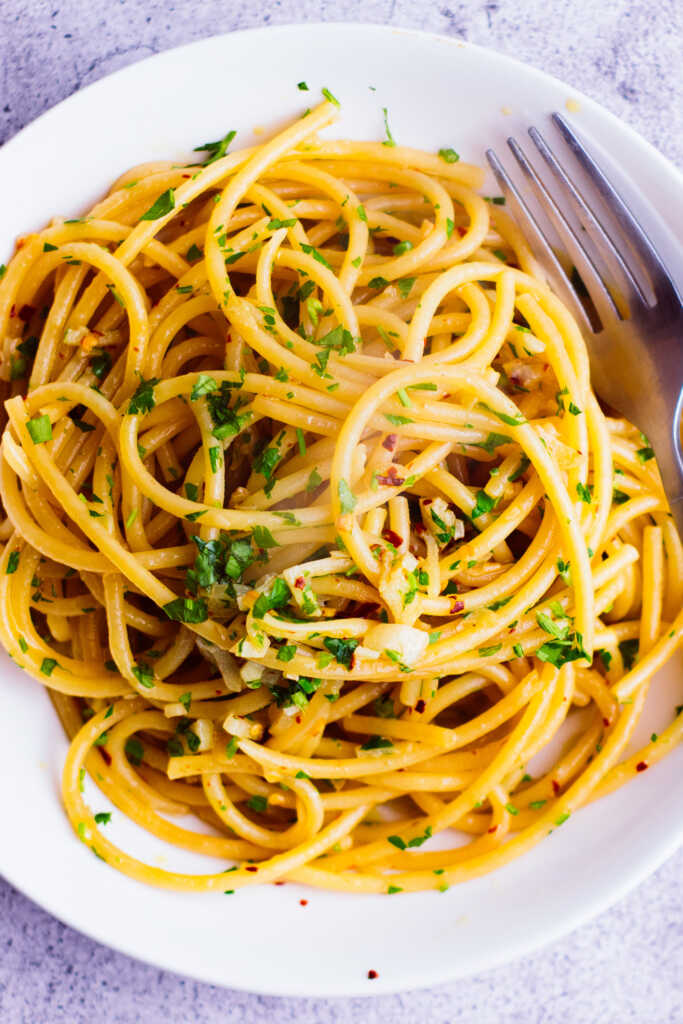
If there’s one pasta dish I always have on rotation, it’s bucatini aglio e olio. It’s rich, garlicky, a little spicy, and comes together in about 20 minutes — no fancy ingredients, just something super tasty.
I first discovered this variation by accident. I always made spaghetti aglio e olio and when trying out new pastas, I thought Id give bucatini a try. The thicker, hollow pasta captures the sauce and gives a really nice bit of chew to the dish.
Today, I’ll show you how to make this super simple dish — with a few personal touches and pro tips I’ve picked up along the way.
Why You’ll Love This Recipe
Bold Flavour
With just a handful of pantry staples — garlic, olive oil, chilli flakes, and pasta — this dish proves that simple ingredients can deliver big flavour.
Ready in 20 Minutes
Perfect for weeknights or when the fridge is bare, Bucatini Aglio e Olio comes together fast!
Restaurant-Worthy
It feels like something you’d order at a restaurant — but it’s totally doable at home, even if your cooking skills are minimal.
A True Pantry Hero
No fancy ingredients required. Chances are, you already have everything you need in your kitchen.
Customisable Heat
Dial the chilli up or down depending on your spice preference
Slurp-Worthy Texture
Bucatini’s hollow centre soaks up that garlicky oil, delivering more flavour with every twirl.
If you’re a fan of simple but bold flavours, don’t miss the rest of my pasta recipes collection.
What Is Bucatini Aglio e Olio?
Bucatini aglio e olio translates to “bucatini with garlic and oil.” It’s a simple pasta dish but it all comes down to technique and timing. Unlike its cousin, spaghetti aglio e olio, bucatini has a hollow center, which gives this dish a bit more chew and I think enhances the aglio e olio experience.
If you love aglio e olio, try my penne aglio e olio recipe for a slightly different twist on the classic!
Equipment Needed
Cheese grater
Large deep skillet or sauté pan
Sharp knife or mandoline (for slicing garlic evenly)
Microplane (for zest or cheese)
Ladle (to scoop pasta water)
Tongs (for tossing pasta and sauce)
Ingredients
All pantry staples — nothing fancy but they are all equally important
- 200g bucatini pasta
- 4 cloves garlic, minced
- 6 tbsp extra virgin olive oil (use the best you can get your hands on)
- 1/2 tsp red pepper flakes (adjust depending how spicy you like it)
- 1/4 cup fresh parsley, chopped
- Salt and freshly ground black pepper, to taste
- 1/4 cup grated Parmesan (optional and controversial but I sometimes add cheese)
- Zest of 1 lemon (optional for brightness and adds to the freshness)
- Want to add texture? A spoonful of pangrattato breadcrumbs takes it to another level.
Ingredient Notes From My Kitchen
Parsley: I like to add chopped parsley for colour and freshness.
Bucatini: I love using bucatini because it’s thick and slightly hollow — it gives great texture and clings to the oil. Spaghetti or linguine work too, but bucatini gives the dish more chew.
Garlic: A lot of recipes use sliced garlic but I prefer to mince mine as I want the olive oil flavoured with garlic – I love garlic! If you like a milder garlic flavour, infuse the oil with sliced garlic then remove the slices.
Olive Oil: Use good quality extra virgin olive oil — the dish won’t work otherwise. I use about 60–80ml (1/4 to 1/3 cup) depending on how much pasta I’m cooking.
Chili Flakes: Adjust to taste. I like a medium heat and often add a pinch more right at the end.
Pasta water: I have listed this as an ingredient as its so important to this dish coming together – you need it to create that silky emulsion with the olive oil.
Step-by-Step: How to Make Bucatini Aglio e Olio
Cook the Pasta
I like to cook my pasta for this in a large frying pan. The benefit of this is I can use less water which results in a starchier pasta water for helping to create that emulsified sauce. I like to cook the pasta around 3 minutes shy of al dente and finish cooking it with the pasta water and oil to get that emulsified sauce through pan tossing and continuous stirring.
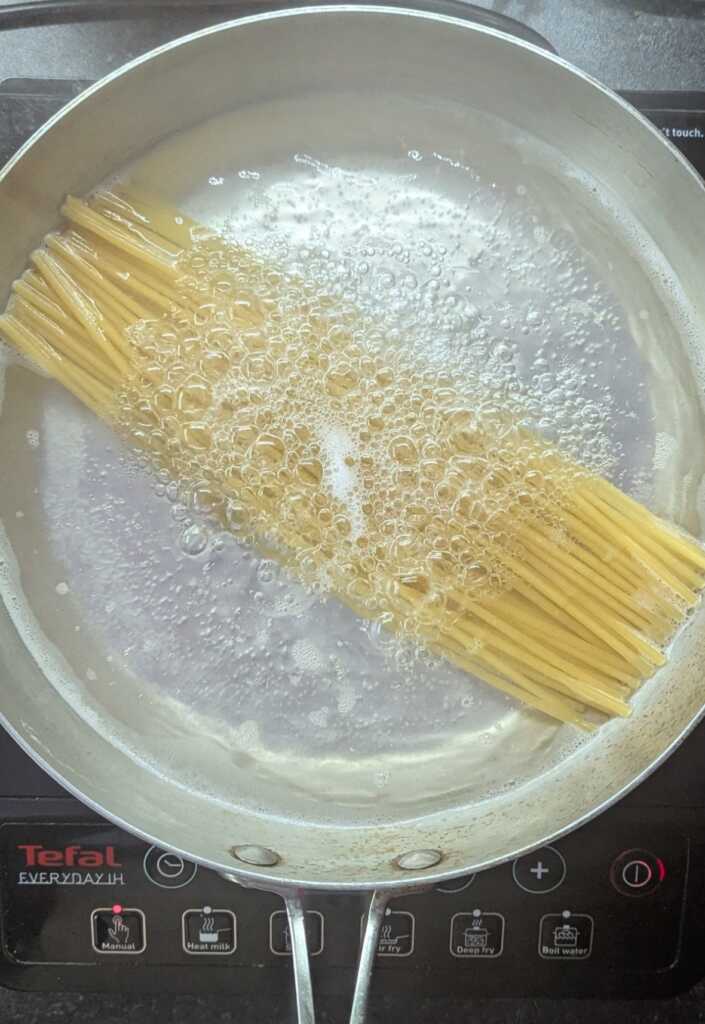
Pro tip: Reserve 1 cup of pasta water before draining — it’s key for emulsifying the sauce.
Make the Garlic-Infused Oil
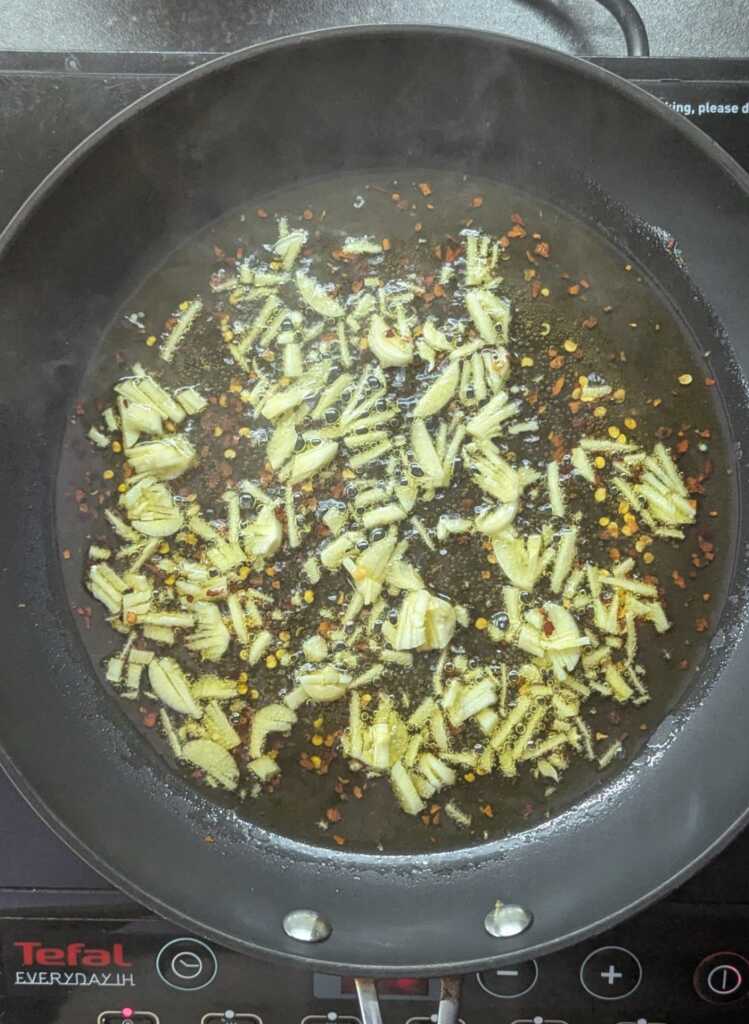
While the pasta cooks, heat the olive oil in a large skillet over medium-low heat
Add red pepper flakes and sauté for 30 seconds to bloom the spice and infuse the heat into the oil
Add sliced/minced garlic and cook gently for 2 minutes until golden and fragrant. You can also start the garlic in cold oil if you want to get more garlic flavour in the dish.
Do not let it burn — bitter garlic will totally ruin the dish.
Bring It All Together
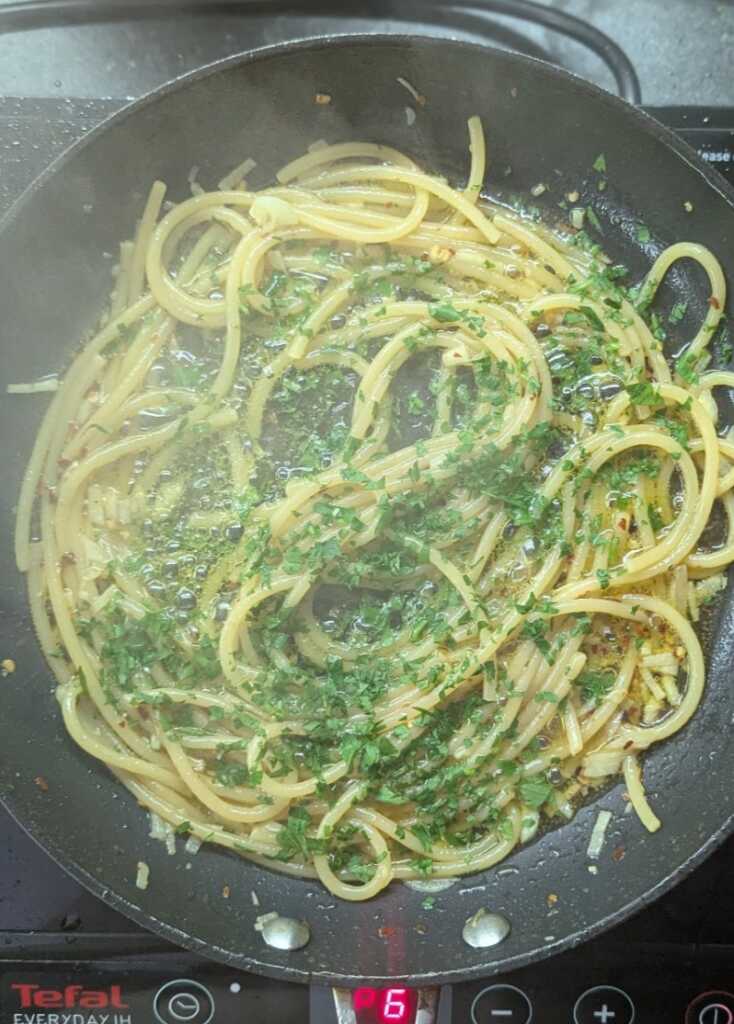
Add the drained pasta to the skillet and toss with the garlic oil. Pour in a little of the pasta water, stir vigorously/pan toss to create a light, glossy sauce. In Italian this is called mantecatura, which means to bring together.
Add more water if needed to loosen the sauce.

Finish with Freshness
Remove from the heat. Stir in chopped parsley, and season with salt and black pepper.
Here is where you can add extra flavour with grated parmesan or a little fresh lemon zest.
Pro Tip: Create a Silky Sauce with Pasta Water
To get that glossy, restaurant-style sauce, it’s all about emulsification. After the garlic has infused the oil (and before adding pasta), remove the pan from the heat. Stir in a small ladle of hot pasta water — it’ll sizzle and start to thicken. Then return the pan to low heat, add the drained pasta, and toss vigorously. The starches from the water help bind the oil to the noodles and coat them.
Tips From My Kitchen
Add pasta straight from the pot to the pan — a little water on the pasta helps the sauce cling.
Start your garlic in cold oil — this helps to infuse the oil evenly and also minimizes the chance of the garlic burning.
Don’t walk away — always keep an eye on your garlic as it can burn very quickly and ruin the dish.
Reserve some starchy pasta water to help emulsify the sauce and coat the bucatini evenly. I like to add just a splash at a time to get the right consistency – you can always add more if needed.
If you enjoy bold Italian flavours, you’ll love my Rigatoni Arrabbiata — a spicy tomato-based pasta that’s every bit as quick and satisfying.
What Can Go Wrong (And How to Fix It)
Pasta breaks or goes mushy? Overcooking or stirring too aggressively when finishing in the pan can break bucatini strands. Fix: Cook pasta until just shy of al dente and handle gently when tossing with the oil.
Garlic burned? If it turns dark brown or smells acrid, start over — burnt garlic will ruin the dish.
Pasta clumped together? Stir it well in the first minute of cooking and use plenty of boiling water. Don’t forget to salt your pasta water.
Too oily or too dry? Use pasta water to balance it — add a splash at a time until the sauce looks glossy and coats the pasta.
Too spicy? Use fewer chili flakes or bloom them briefly instead of toasting for less heat.
Garlic unevenly cooked? This can happen if the oil isn’t heated evenly or the garlic varies in thickness. Fix: Cut garlic uniformly and stir constantly so all pieces cook at the same rate.
Garlic too raw or under-flavoured? If garlic is added to oil that’s too hot or not steeped long enough, it might not infuse properly. Fix: Start garlic in cold oil and cook it slowly to draw out maximum flavour.
Oil splattering during cooking? Happens when water clings to the garlic or the pan isn’t fully dry. Fix: Pat garlic dry before adding and use a high-sided pan or splash guard if needed.
Sauce separates or doesn’t cling to the pasta? If there’s too much oil or not enough starchy water, the oil can separate and pool. Fix: Add pasta water gradually while tossing vigorously to emulsify the sauce.
Tried and Tested Variations
With Parmesan or Pecorino Romano PDO: Not traditional, but I sometimes finish with a sprinkle if I want it richer.
Add Anchovies: Melt into the oil with the garlic for a savoury boost — they dissolve completely and won’t make your dish taste fishy
Add Lemon Zest: Brightens everything up and pairs well with parsley.
Pangrattato: Adds crunch — toast breadcrumbs in a dry pan with a little garlic and olive oil.
Timing Notes From My Kitchen
Takes me about 15 minutes start to finish. I start heating the oil while the pasta cooks, so everything’s ready at once.
Serving Suggestions
This dish is best served immediately, while it’s hot and the garlic is fragrant.
As a Main: Add a soft poached egg or shaved Parmesan. I like to add a fillet of pan-fried sea bass on top to make it a more complete meal.
Serve with: A crisp green salad or roasted vegetables.
As a Side: Pairs well with grilled chicken, shrimp, or roasted fish.
Storage Tips & Reheating Instructions
Storing:
- This dish is best eaten when fresh, but leftovers can be stored in the fridge for up to 2 days.
- The garlic may mellow and the pasta will absorb some oil.
Reheating:
- Stovetop (best): Heat in a non-stick pan with a splash of water or extra oil, tossing until warm.
- Microwave: Reheat in short bursts (30 seconds), stirring between each.
Note: Garlic may lose crispness when reheated, but the flavour remains rich and satisfying.
For a tomato-free but equally comforting option, try my Easy Penne Napoli — a light, aromatic sauce that’s perfect for weeknights.
Final Thoughts
Bucatini aglio e olio is more than just a quick pasta dish — it’s a reminder that great flavour can come from good quality simple ingredients and not a huge amount of effort.
I’ve made this countless times — it never disappoints and I even find myself asking the question – how can just garlic and olive oil taste so good!
Have you tried your own twist on aglio e olio? Find more ideas in my Easy Pasta Recipes collection.
Added anchovies? Toasted breadcrumbs? Let me know in the comments — I’d love to hear what you’ve created!
FAQ’s
Yes! Spaghetti, linguine, or even fettuccine work well. Bucatini gives a chewier bite and holds sauce inside its hollow center.
Use medium-low heat. Stir constantly and remove the pan from heat the moment the garlic turns golden.
Traditionally no, but many home cooks add Pecorino Romano or Parmesan for richness.
Absolutely. Use your favourite gluten-free spaghetti or bucatini. Just adjust the cooking time accordingly.
Try a dry white wine like Pinot Grigio, or Sauvignon Blanc. Something crisp and clean to balance the garlic and oil.
Try Another Recipe

Bucatini Aglio e Olio (20-Minute Italian Classic)
Equipment
- 1 large frying pan
- 1 medium frying pan/saucepan
- 1 chefs knife
- 1 pair of silicone tongs
Ingredients
- 200 g bucatini pasta
- 4 cloves garlic minced or thinly sliced
- 6 tbsp extra virgin olive oil
- 1/2 tsp red pepper flakes adjust to taste
- 1/4 cup fresh parsley chopped
- Salt and freshly ground black pepper to taste
- 1/4 cup grated Parmesan optional
- Zest of 1 lemon optional, for brightness
Instructions
- Cook the Pasta
- Bring a large frying pan of well salted water to the boil.
- Cook the bucatini about 3 minutes short of al dente.
- Reserve 1 cup of pasta water, then drain the pasta.
- Make the Garlic Oil
- While pasta cooks, heat olive oil in a large skillet/saucepan over medium-low heat.
- Add red pepper flakes and sauté for 30 seconds to get the heat into the oil
- Add garlic and cook gently for 2 minutes, until just golden and fragrant. Do not let it brown.
- Combine and Emulsify
- Add drained pasta to the skillet with the garlic oil.
- Toss or stir vigorously while gradually adding reserved pasta water.
- Continue tossing/stirring until a light, glossy sauce forms (this is called mantecatura).
- Finish and Serve
- Remove from heat. Stir in chopped parsley.
- Season with salt and black pepper to taste.
- Optional: Add grated Parmesan and/or lemon zest for extra depth.
- Serve immediately.
Notes
- Use high-quality extra virgin olive oil — its the star of the dish
- Golden garlic only — DO NOT BURN IT!
- For a milder garlic flavour, sauté whole crushed cloves in the oil and remove before serving.
- Don’t skip the pasta water — it’s key to creating that smooth sauce
Easy Variations to Make It Your Own
Prosciutto or Pancetta: Crisp a few slices for a salty-savoury finish (not traditional, but delicious).
Anchovy Aglio e Olio: Add 1–2 anchovies to the oil with garlic and let them melt for a deep umami base.
Lemon Zest: Brighten it up with zest stirred in at the end.
Basil or Mint: Swap parsley with fresh basil for a sweet herbal note.
Toasted Breadcrumbs: Sprinkle over the finished dish for crunch.
Cherry Tomatoes: Add halved cherry tomatoes with the garlic for a burst of juiciness.

Hi, I’m Paul! I’m a passionate home chef, recipe developer, and food lover who believes that cooking should be fun, rewarding, and stress-free! Through Scoffs & Feasts, I share my favorite tried-and-tested recipes, cooking tips, and troubleshooting advice to help home cooks gain confidence in the kitchen. Whether you’re a beginner or an experienced foodie, I hope my recipes inspire you to try something new.